

by Bandura Vladislava
9 Червня 2026, 23:58
Three Years After the Destruction of the Kakhovka Hydroelectric Power Plant: Ecocide Without Borders and a Lesson for the World
How One Environmental Disaster Reshaped Southern Ukraine and Became a Global Challenge “The destruction of the Kakhovka Hydroelectric Power Plant was not only an attack on Ukraine’s environment — it was an attack on global environmental security. We lost not only a reservoir, forests, wetlands, and thousands of species. We received a warning for the […]
How One Environmental Disaster Reshaped Southern Ukraine and Became a Global Challenge
“The destruction of the Kakhovka Hydroelectric Power Plant was not only an attack on Ukraine’s environment — it was an attack on global environmental security. We lost not only a reservoir, forests, wetlands, and thousands of species. We received a warning for the entire world. Polluted waters reached the Black Sea, agricultural losses affected food systems beyond our borders, ecosystems supporting migratory species were destroyed, and climate risks intensified across the region. The environment does not recognize political boundaries. What happens to a river in Ukraine today can affect biodiversity, food security, and human well-being far beyond Europe tomorrow. This tragedy has become one of the clearest examples of why ecocide must be recognized as an international crime and why accountability for environmental destruction during war must become inevitable. Protecting nature is no longer only an environmental issue — it is a matter of peace, security, and the future of humanity.” — Iuliia Markhel, Environmental Researcher, Public Figure, Co-Founder of Let’s Do It World, and Leader of Let’s Do It Ukraine.
What You Will Learn in This Article
Three years after the destruction of the Kakhovka Hydroelectric Power Plant, the environmental consequences continue to unfold across Ukraine and beyond. This article examines how the disaster transformed the ecological landscape of southern Ukraine, which ecosystems suffered the greatest losses, whether the historic Velykyi Luh floodplain is returning, and what long-term risks remain for water resources, soil quality, biodiversity, agriculture, and climate stability. It also explores why the Kakhovka case may become a landmark international precedent in the recognition of ecocide, what mechanisms of accountability and compensation should be applied, and why environmental crimes committed during war represent a threat not only to one nation but to global environmental security.
An Environmental Crime With Global Consequences
June 6 2026 marks three years since the destruction of the Kakhovka Hydroelectric Power Plant — one of the most devastating environmental disasters and acts of ecocide in modern European history.
Ukraine officially classified the destruction of the dam as ecocide. However, as time passes, it becomes increasingly clear that the consequences extend far beyond Ukraine’s borders.
The environment knows no borders.
Water pollution, ecosystem destruction, biodiversity loss, climate disruption, and soil degradation do not stop at national frontiers. Rivers flow into seas, species migrate across continents, and environmental instability affects entire regions. For this reason, the Kakhovka disaster should not be viewed solely as a Ukrainian tragedy but as a global environmental crisis with international implications.
A Disaster Still Being Measured
Before June 2023, the Kakhovka Reservoir was one of Europe’s largest artificial water bodies. It held approximately 18 cubic kilometers of freshwater and covered more than 2,150 square kilometers.
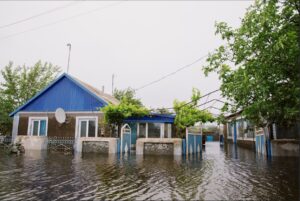
Following the destruction of the dam, around 620 square kilometers of land were flooded. More than 80 settlements were affected, while over 100,000 people experienced direct or indirect consequences.
Yet the immediate flooding represented only the beginning of a much larger environmental transformation.
One of the most severe long-term impacts has been the collapse of the irrigation system that supplied water to more than 580,000 hectares of agricultural land. For southern Ukraine, this means a fundamental shift in agricultural production, increased risks of desertification, and growing pressure on water resources.
Three years later, the region is still adapting to an entirely new environmental reality.
The Disappearance of an Entire Ecosystem
Along with the reservoir, an ecosystem that had developed over decades effectively disappeared.
The Lower Dnipro wetlands, floodplain forests, fish spawning grounds, and nesting habitats for waterbirds suffered the greatest losses.
The sudden drop in water levels resulted in the mass mortality of fish, mollusks, crustaceans, and countless other aquatic organisms. Critical breeding and feeding habitats were destroyed within days.
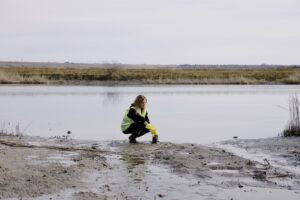
Species closely linked to wetland ecosystems proved particularly vulnerable. Populations of bream, pike-perch, carp, crucian carp, catfish, mollusks, and aquatic invertebrates experienced severe declines.
Bird species that depend on wetlands and floodplain habitats, including herons, cormorants, terns, and waders, also suffered significant losses.
Some local populations may never recover.
The tragedy highlighted the fragility of ecosystems that take decades to form but can be destroyed within hours.
The Return of Velykyi Luh
Despite the scale of destruction, nature has demonstrated remarkable resilience.
Three years after the disaster, scientists have documented more than 300 plant species on the former reservoir bed. Meadows, shrubs, and young forests are rapidly emerging.
Willow stands are expanding quickly, while birds, insects, and wildlife are gradually returning.
Researchers are witnessing the re-emergence of Velykyi Luh, the historic Dnipro floodplain ecosystem submerged during the creation of the Kakhovka Reservoir in the 1950s.
For centuries, Velykyi Luh served as one of Ukraine’s most valuable natural landscapes and the cradle of the Zaporizhian Cossacks. Today, this historic territory is once again becoming home to developing ecosystems.
However, scientists emphasize that nature is not returning to its previous state.
A new ecological system is emerging — different from the one that existed before 2023 and impossible to fully recreate.
Hidden Threat: Toxic Pollution
One of the most serious long-term consequences remains environmental contamination.
The destruction of the dam exposed and dispersed sediments that had accumulated pollutants over decades, including heavy metals and toxic compounds.
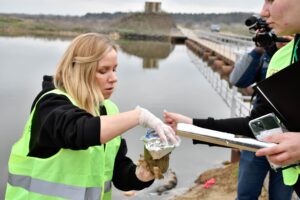
Experts estimate that approximately 83,000 tons of heavy metals may remain within the exposed sediments, including lead, cadmium, nickel, zinc, and other hazardous substances.
These pollutants continue to migrate into soils, groundwater, and surface waters, creating risks for ecosystems, agriculture, and public health.
Environmental researchers warn that this hidden contamination may remain one of the most underestimated consequences of the war for decades to come.
Why the Kakhovka Disaster Matters Beyond Ukraine
The consequences of the Kakhovka disaster extend far beyond Ukraine’s territory.
When millions of cubic meters of water rushed downstream, they carried pollutants, industrial waste, fuel residues, and contaminated sediments into the Dnipro River, the Dnipro-Bug Estuary, and eventually the Black Sea.
The Black Sea is a shared ecosystem connecting multiple countries. Pollution entering its waters affects marine biodiversity, fisheries, coastal ecosystems, and regional environmental stability.
The disaster also created risks for global food security.
Southern Ukraine has historically been one of Europe’s most productive agricultural regions. The destruction of irrigation infrastructure reduced agricultural capacity across vast areas of farmland that previously contributed to international food supplies.
At a time when the world faces growing climate pressures and food insecurity, disruptions in agricultural production affect global markets and vulnerable populations far beyond Ukraine.
The climate implications are equally significant.
Large water bodies influence humidity, local temperatures, precipitation patterns, and regional climate regulation. The disappearance of the reservoir increases risks of drought, desertification, and ecosystem degradation across southern Ukraine and the wider Black Sea region.
The loss of biodiversity is another global concern.
The Lower Dnipro wetlands formed part of important migratory corridors connecting Europe, Asia, and Africa. The destruction of breeding, feeding, and resting habitats affects migratory species that cross international borders and contribute to global biodiversity.
Some plant and animal populations may never fully recover.
The Kakhovka disaster demonstrates that environmental crimes committed during war are never local events. Their impacts spread through rivers, seas, ecosystems, economies, and climate systems, affecting millions of people far beyond the conflict zone.
Consequences That Will Last for Generations
Many of the consequences of the Kakhovka disaster will remain visible for the next 10–20 years and beyond.
Environmental experts anticipate continued changes in regional climate patterns, increasing drought risks, transformation of agricultural systems, and shifts in biodiversity.
Some species will adapt. Others will disappear. New ecosystems will emerge.
Southern Ukraine has entered a new ecological era whose final outcome remains uncertain.
What is already certain is that the environmental consequences of this disaster will be measured not in years, but in generations.
Rebuilding the Dam or Rethinking the Future?
The future of the Kakhovka HPP remains one of the most important environmental and policy questions facing Ukraine.
Before its destruction, the facility played a critical role in energy generation, irrigation, and water supply.
However, the ecological transformation now taking place has prompted scientists, environmentalists, and policymakers to reconsider whether rebuilding the previous system is the best solution.
Many experts advocate for a new model of Dnipro River management that balances water security, economic development, ecosystem restoration, biodiversity conservation, and climate resilience.
The discussion is no longer solely about rebuilding infrastructure.
It is about defining the environmental future of an entire region.
Why Ecocide Is So Difficult to Prove
Unlike many war crimes, ecocide is not confined to a single location or moment in time.
Its consequences unfold gradually, often over years or decades.
Establishing responsibility requires extensive scientific evidence, including long-term monitoring of water quality, soil contamination, biodiversity loss, hydrological changes, and climate impacts.
For this reason, the Kakhovka case is becoming one of the world’s most important examples in discussions surrounding the legal recognition of ecocide.
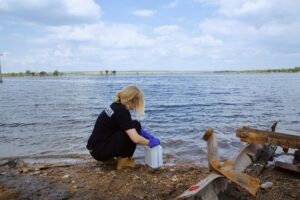
The evidence collected today may help shape international environmental law for generations to come.
International Accountability and Compensation
The global community increasingly recognizes the need to hold perpetrators accountable for environmental destruction during armed conflict.
Key priorities include:
- Continued scientific documentation of environmental damage;
- Recognition of ecocide as an international crime;
- Development of effective compensation mechanisms;
- Application of the “polluter pays” principle;
- Utilization of frozen Russian assets to support environmental restoration and recovery.
The Kakhovka disaster is not simply a case of infrastructure destruction.
It is a case of profound ecological transformation affecting water resources, biodiversity, climate systems, food security, and human well-being.
A Lesson for Ukraine and the World
The destruction of the Kakhovka Hydroelectric Power Plant has demonstrated that environmental infrastructure is part of national and global security.
Rivers, forests, wetlands, reservoirs, and protected ecosystems must be treated as strategic assets whose protection is as important as the protection of energy, transport, and economic infrastructure.
Three years after the tragedy, the world has received a powerful reminder that war can destroy not only cities and economies but entire ecosystems upon which future generations depend.
The central lesson remains clear:
The environment knows no borders.
Ecocide in Ukraine affects water resources, biodiversity, food security, climate systems, and environmental stability far beyond the country’s territory. Protecting nature during armed conflicts is therefore not solely a Ukrainian responsibility but a shared obligation of the international community.
The response to the Kakhovka disaster will help determine how the world addresses environmental crimes in the future.
Protecting nature today is an investment in global peace, resilience, and the well-being of generations yet to come.
Learn more on the website: worldcleanupday.org, letsdoitukraine.org
Social media: facebook.com/letsdoitukraineeco / instagram.com/letsdoitukraine / https://www.tiktok.com/@letsdoitukraine
Vladyslava Bandura — Head of Press Center, +380661796779, press@letsdoitukraine.org